Category: Uncategorized

  • Soul’s journey before and after birth in Hindu texts

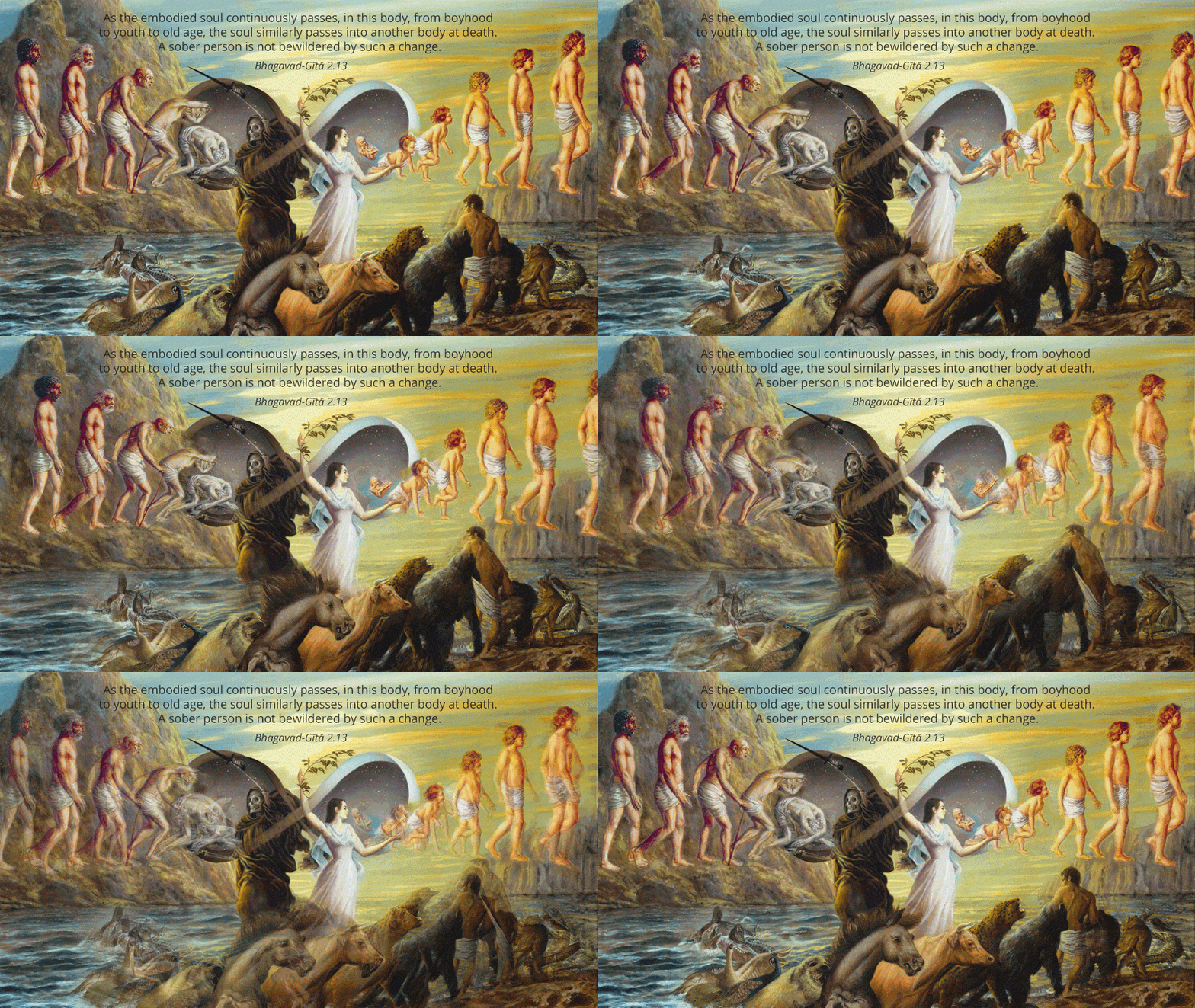
    The journey of the soul is described as a continuous cycle — moving from one body to another through birth, death, and rebirth, governed by karma (actions) and dharma (righteous duty). The concepts of afterlife and before life are deeply interwoven in this cycle, known as Samsara.

    Before Life -: The Journey Before Birth

    In Hindu belief, a soul (Atman) is eternal — it was never born, nor will it ever die. However, it takes countless births based on past karma.

    Key Concepts:

    Reincarnation (Punarjanma): The soul is reborn into a new body depending on the karma accumulated in previous lives.

    Karmic Debt: If the soul has unfinished duties or unresolved karmic imprints, it must return.

    Yoni-Bheda (Different wombs): The soul can take birth not only as a human but also as an animal, plant, or divine being — as per its karma.

    Garbhāvasthā (State in the womb): According to texts like the Garbhopanishad, the soul is aware of its past lives while in the womb and prays for liberation. But at the time of birth, Maya (illusion) makes it forget everything.

    After Life -: What Happens After Death

    Upon death, the soul leaves the body and begins a new journey. Hindu scriptures describe various paths the soul may take:

     1. Immediate Rebirth (Punarjanma):

    If the karma is strong, the soul may be reborn immediately into a new body.

    2. Pitṛ Loka (Ancestor Realm):

    The soul may reside temporarily with the Pitṛs (ancestors) if it has lived a virtuous life.

    Rituals like Śrāddha help the soul transition peacefully.

     3. Yamaloka (Abode of Yama – God of Death):

    The soul is taken by Yamadootas (messengers of Yama).

     The Chitragupta records its deeds and decides the next path: heaven, hell, or rebirth.

     4. Svarga and Naraka (Heaven and Hell):

     These are temporary abodes where the soul enjoys or suffers the fruits of its actions.

     Svarga (heaven) is for the virtuous, Naraka (hell) for sinners. But no stay is eternal.

     Final Goal -: Moksha (Liberation)

     The ultimate aim in Hinduism is to escape the cycle of birth and death.

     Through Jnana (knowledge), Bhakti (devotion), Karma (action), or Dhyana (meditation), the soul can attain Moksha, merging with Brahman, the Supreme Reality.

     Once Moksha is attained, the soul is never reborn — it becomes free from all karma and merges with divine consciousness.

     Scriptural References:

    Bhagavad Gītā 2.20:

      “Na jāyate mriyate vā kadācin… The soul is never born, nor does it ever die.”

    Katha Upanishad 2.18:

      “As a man casts off worn-out garments and puts on others, the soul leaves worn-out bodies and enters new ones.”

    Garuda Purana:

      Describes the detailed journey of the soul after death, including 16 stages and punishments in Naraka.

    Summary Table:

     Before Life  -:  Soul prepares for rebirth based on past karma; forgets past at birth .

     Life                -: Current karma is created; dharma must be followed.                   

     After Life       -: Soul judged by karma; sent to heaven, hell, or rebirth .             

     Ultimate Aim / Moksha  -:  freedom from all births and union with Brahman.             
  • REALWORLD OF SOUL

    In Hindu mythology and philosophy, the RealWorld is a deep and multi-layered concept. It blends metaphysics, cosmology, spirituality, and symbolism.

    1. The World as Maya (Illusion)

    Maya means illusion or cosmic deception.

     According to Hindu philosophy (especially Advaita Vedanta), the material world is not  absolutely real — it is temporary and ever-changing.

     Only Brahman (the Supreme, formless, unchanging reality) is truly real (Sat).

    Just like a dream feels real while dreaming, the world feels real until one awakens spiritually.

    Analogy -: A movie on a screen — it appears real, but the screen (Brahman) remains unchanged underneath.

    2. Brahman – The Ultimate Reality

    Hinduism teaches that Brahman is the absolute, eternal, infinite source of all existence.

     Brahman is formless, genderless, and beyond human comprehension.

     All gods (Brahma, Vishnu, Shiva, etc.) and all forms of energy are considered manifestations of Brahman.

    3. Atman and the Universe

    Atman = the inner self or soul.

    Atman is considered identical to Brahman in Advaita Vedanta: Aham Brahmasmi” (I am Brahman).

     The realization that your soul is divine and connected to all is the key to liberation (Moksha).

    4. Cyclical Nature of the Universe

    Hindu cosmology sees the universe as cyclical, not linear.

    Creation → Preservation → Destruction → Rebirth

     These are symbolized by the Trimurti:

      Brahma – Creator

      Vishnu – Preserver

      Shiva – Destroyer

     The universe undergoes repeated cycles of birth and death over vast time scales (Yugas and Kalpas).

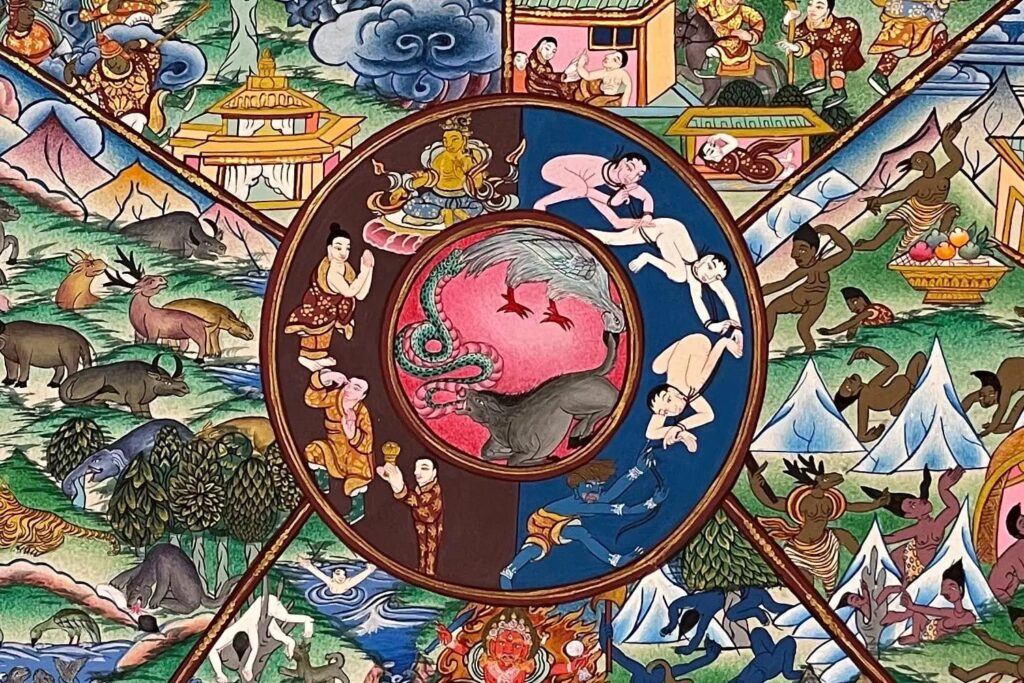
    5. Karma and Samsara (Cycle of Rebirth)

    Karma: Every action has consequences.

    Samsara: The endless cycle of birth, death, and rebirth.

     One remains trapped in samsara due to desire, ignorance, and ego.

     Liberation (Moksha) ends this cycle and reunites the soul with the Supreme.

    6. The Purpose of Life

    In Hindu thought, life’s ultimate goals (called Purusharthas) are:

    1. Dharma – Duty, ethics, righteousness

    2. Artha – Prosperity, success

    3. Kama – Desire, love, pleasure

    4. Moksha – Liberation from the cycle of birth and death

    All life is a journey from ignorance to self-realization.

    Summary:

     Concept                                                           Meaning                                                                 

    Maya                                     The world is an illusion, not ultimate reality

    Brahman                               Supreme, eternal, formless reality            

    Atman                                    The individual soul, divine and eternal       

    Karma                                      Law of cause and effect                       

    Samsara                                 Cycle of birth, death, and rebirth            

    Moksha                                   Liberation and union with Brahman             

  • Hello world!

    Welcome to WordPress. This is your first post. Edit or delete it, then start writing!